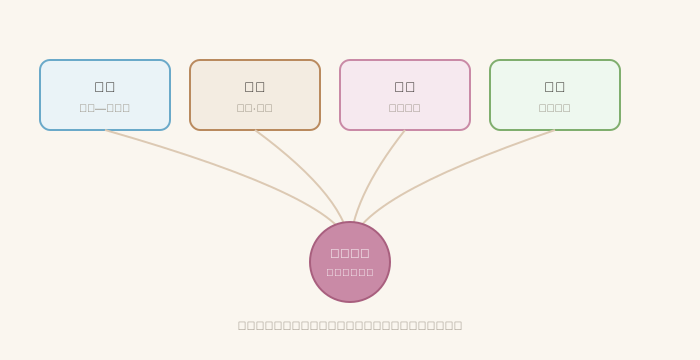
本册回答“为何、何为、如何、何益”,以公理体系收束,逻辑严格自洽。 本册回答“为何、何为、如何、何益”,以公理体系收束,逻辑严格自洽。
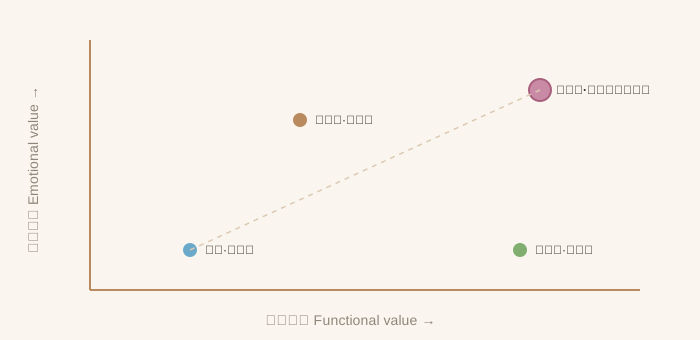
客户情绪价值(CEV)指品牌在与客户的全部接触中,所激发、承载并持续回应的主观情绪体验及其衍生的意义感、安全感与归属感[1]。它不同于功能价值:功能价值回答“能不能用、好不好用”,情绪价值回答“用的时候,我是否更安顿、更被理解、更像想要的自己”。
Customer Emotional Value (CEV) is the subjective emotional experience a brand evokes, holds and repeatedly answers across all touchpoints—together with the resulting sense of meaning, safety and belonging. It differs from functional value: function asks 'does it work', emotion asks 'does using it leave me more settled, more understood, more myself'.
在 SBT 的“四个结合”中,传播学解决品牌建构与客户情绪价值的构建。当化学与皮肤医学把产品做成可用,经济学把它送达可买,传播学则把一次使用变成一生认同。情绪价值不是修饰品,而是“城墙”之上让客户回来的那面旗帜。
In SBT's 'four combinations', communication builds the brand and the customer's emotional value. Chemistry makes it usable, economics makes it buyable, communication turns one use into lifelong loyalty. Emotional value is not decoration; it is the flag above the wall that brings customers back.
小字:情绪价值 ≠ 情绪营销。前者是客户真实获得的体验增量,后者是品牌主动的沟通动作。把动作当成价值,是本册要避免的逻辑谬误[2]。
Note: emotional value ≠ emotional marketing. The former is what the customer truly gains; the latter is the brand’s act. Conflating them is the fallacy this volume avoids.
进一步看,客户对护肤品牌的“情绪依赖”并非偶然:高频、私密、低风险的日常接触,使护肤成为少数能稳定进入生活仪式的消费品。它不喧哗,却天天在;它不改变命运,却日日确认“我值得被照顾”。这种微妙,正是情绪价值扎根的土壤。
Look closer: emotional dependence on a skincare brand is no accident. As a high-frequency, private, low-risk daily contact, skincare is one of the few commodities that stably enters life rituals. It is quiet yet daily; it changes no destiny yet confirms each day that "I am worth being cared for". This subtlety is exactly the soil where emotional value takes root.
具体看,宝措卤阳修护乳定“轻盈不黏腻”、修护霜定“绵密包裹”,都是在降低使用门槛:触感舒服,客户才愿意天天用;天天用,情绪线索才积得起来。情绪价值不是一次震撼,而是千百次不讨厌。
Concretely, Baocuo Luyang's lotion is "light, non-greasy" and cream "rich yet breathable"—lowering the usage threshold. Comfortable touch invites daily use; daily use accumulates emotional cues. Emotional value is never one shock, but a thousand non-annoyances.
情绪价值不是附加功能,而是产品与人的关系本身——配方让人“能用”,情绪让人“还想用”。衡量它的从不是好评字数,而是“你多久没想起换它”。
Emotional value is not an add-on but the relation itself—formula makes it usable, emotion makes it wanted. It is measured not by review counts but by "how long since you thought to switch".
落地提醒:先让“安心”发生,再谈“喜欢”;安心是地基,喜欢是楼上。顺序反了,楼就容易塌。
Practical note: let "calm" happen before "like"; calm is the foundation, like the floor above. Reverse the order and the building leans.
补充:情绪价值也降低“决策疲劳”——当客户信任一个品牌,便不必每次重新比较成分与价格,把精力留给生活本身。这恰是“以人为本”的落点。
Add: emotional value also cuts decision fatigue—trusting a brand, the customer need not re-compare ingredients and prices each time, freeing energy for life itself. That is where "people-first" lands.
第一重目的,回应人的归属需求:被需要、被看见、被善待是动机层级的基础项。护肤作为每日高频、贴身的私密仪式,天然承接此需求——清晨与深夜两次涂抹,不只在补水,也在完成“我照顾自己”的自我确认。
First, it answers the need to belong: to be needed, seen and treated kindly. Skincare, a daily intimate ritual, naturally carries this—two applications a day confirm 'I take care of myself'.
第二重,把功能利益转化为关系资产:一次性交易随使用消散,情绪关系沉淀为信任与偏好,转化为复购、溢价与口碑。第三重,抵御同质化——当配方、成分、价格都可被复制,唯有情绪记忆难以平移。
Second, it turns function into relational equity: a one-off sale ends with use; emotional relation compounds into trust, repurchase and word-of-mouth. Third, it resists commoditization—formulas can be copied, emotional memory cannot.
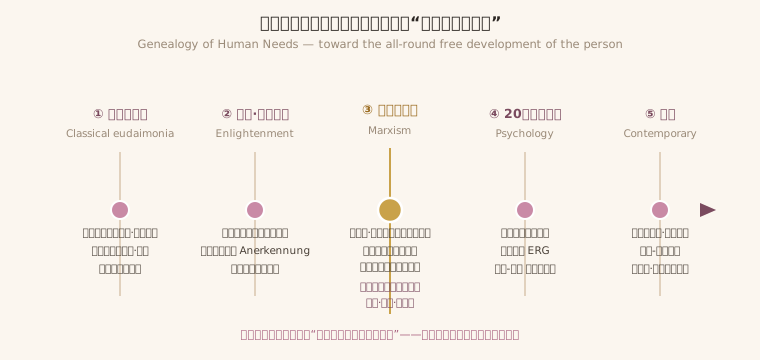
构建情绪价值并非凭空发明,而是回应“人究竟需要什么”这一被哲学与社会科学反复追问的命题。一部需求思想史,可概为五段:① 古典实现论——亚里士多德以 eudaimonia(繁荣、实现潜能)为最高需要,儒家以“尽心尽性”“养其大体”言养心;② 启蒙与德国古典哲学——康德主张“人是目的而非工具”,黑格尔以“承认(Anerkennung)”解释自我确证的需要;③ 马克思主义——人的需要具有社会性与历史性,自由时间的解放是全面发展的前提;④ 二十世纪心理学——马斯洛需求层次、奥尔得弗 ERG、德西—瑞安自我决定论(自主·胜任·关系)把需要实证化;⑤ 当代——积极心理学、体验经济与情绪—神经科学把“意义感与安全感”推到前台[58][59][60]。
Building emotional value answers the ancient question "what does a human need". Five arcs: (1) classical eudaimonia and Confucian self-cultivation; (2) Enlightenment — Kant's "man as end", Hegel's recognition; (3) Marxism — needs are social and historical, freed time enables all-round development; (4) 20th-century psychology — Maslow, ERG, Self-Determination Theory; (5) today — positive psychology, experience economy, affective neuroscience[58][59][60].
马克思主义科学发展观的落脚点——自由人的全面发展。《共产党宣言》断言:“代替那存在着阶级和阶级对立的资产阶级旧社会的,将是这样一个联合体,在那里,每个人的自由发展是一切人的自由发展的条件。”科学发展观(第一要义是发展,核心是以人为本,基本要求全面协调可持续)把这一理想落到发展观:发展的终极尺度不是物的增殖,而是人的全面发展。情绪价值若以“以人为本”为纲,便不只是营销技巧,而是服务“人成为目的本身”的实践——让客户在每日护理中确认自我、舒展主体性[56][57]。
Marxist Scientific Outlook on Development — the all-round free development of the person. The Communist Manifesto: "an association in which the free development of each is the condition for the free development of all." The Scientific Outlook on Development (people-centered; comprehensive, coordinated, sustainable) makes this the measure of progress: not the growth of things, but human all-round development. Emotional value, if people-centered, serves "man as an end in himself"[56][57].
小字提醒:警惕把“情绪价值”异化为对客户情绪的工具化收割。以人为本要求我们把客户的需要当作目的来尊重,而非仅当作可变现的数据。自由人的全面发展,意味着品牌应促成客户更自主、更完整,而非更依附。
Small-print note: beware turning "emotional value" into the instrumental harvesting of feelings. People-centered means treating the customer's need as an end, not merely monetizable data. All-round development means the brand should make the customer more autonomous, not more dependent.
目的三问(SBT-E 版):① 它让客户更安心了吗?② 更愿回来吗?③ 更愿替我们说吗?三问皆“是”,方为有效[3]。
Three questions: (1) calmer? (2) more willing to return? (3) more willing to speak for us? All yes = effective.
通用范式归纳为五条可操作路径:感官锚定、叙事共鸣、仪式确认、身份投射、安全托底。感官锚定以香、质、色、触留下可回忆线索;叙事共鸣把产品接入客户自己的人生脚本;仪式确认把使用化为安定动作;身份投射让产品成为“我是谁”的外显;安全托底以克制与诚实避免焦虑与虚假承诺。
Five operable paths: sensory anchoring, narrative resonance, ritual confirmation, identity projection, safety baseline. Sensory anchoring leaves recallable cues via scent, texture, colour, touch; narrative resonance plugs the product into the customer's own life script.
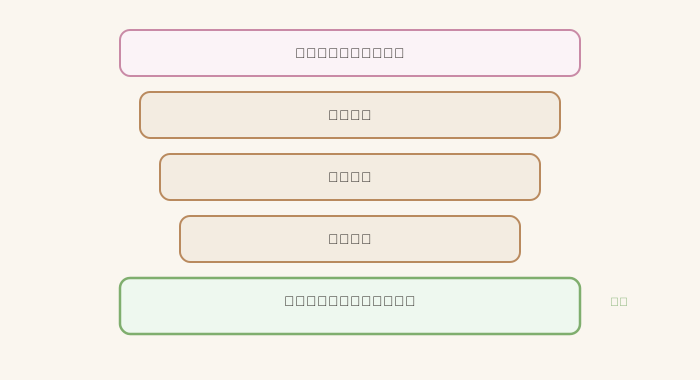
五条不是并列清单而是层级:安全托底是底线(不制造容貌焦虑、不承诺疗效、不收面子溢价、不编造成分故事),其余四条在其上叠加。这一层级,是下册医学与附册品牌共同验证的结构。
They are hierarchical, not a list: safety baseline is the floor (no anxiety-making, no efficacy claims, no face-premium, no fake stories); the other four stack above it. This hierarchy is what later volumes confirm.
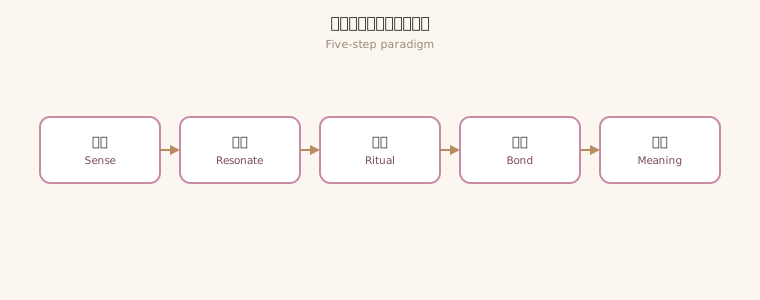
所谓“通用范式”,是把零散做法抽象为可复用的五步:先以感官锚定(香质色触留下线索),再以叙事共振(把产品接入客户自己的人生脚本),继以仪式确认(把使用变成安定动作),然后沉淀为关系(信任与偏好),最终升华为意义(自我照护与身份)。五步首尾相接,便成飞轮。
The "general paradigm" abstracts scattered tactics into five reusable steps: first anchor by sense (scent, texture, colour, touch leave cues); then resonate by narrative (plug the product into the customer's own life script); confirm by ritual (turn use into a settling act); compound into bond (trust and preference); and finally rise to meaning (self-care and identity). The five steps link end to end into a flywheel.
要点:五步不是线性漏斗,而是可回环的飞轮——任一步做扎实,都会反哺前一步(安心让人更愿听故事,故事让人更守仪式)。
Key: the five steps are not a linear funnel but a loopable flywheel—any step done well feeds the one before.
落地建议:先任选一步做扎实(多数品牌从“叙事”起步最省),再补齐其余;不必五步齐发,但要步步相连,缺一便不成飞轮。
Advice: do any one step solidly first (most start with narrative, cheapest), then fill the rest; not all at once, but every step linked—miss one and the flywheel stalls.
从神经科学看,情绪价值经两条通路沉淀为资产。其一是内隐记忆与情绪条件反射:愉悦体验经杏仁核编码,再遇同款瓶身即唤起安宁;其二是催产素与社会依恋:被善待的互动提升信任,使品牌从“物件”变为“关系对象”。
Two neural pathways. First, implicit memory and conditioning: pleasant experience encoded by the amygdala re-evokes calm at the sight of the same bottle. Second, oxytocin and social attachment: being treated well raises trust, turning the brand from object to relation.
从行为看,情绪价值提升“品牌共鸣”与“顾客终身价值”。当客户把品牌纳入自我延伸(extended self),流失成本不再只是金钱,而是身份中断的不适——这正是非价格护城河。
In behaviour, it raises brand resonance and customer lifetime value. Once the brand enters the extended self, switching costs become identity loss, not just money—a non-price moat.
小字:情绪资产有正有负。被操纵、被贩卖焦虑所建的情绪,一旦识破即转厌恶。所以中册措施始终以真实与安全为前提[4]。
Note: emotional equity cuts both ways. Manipulated emotion, once seen, turns to aversion.
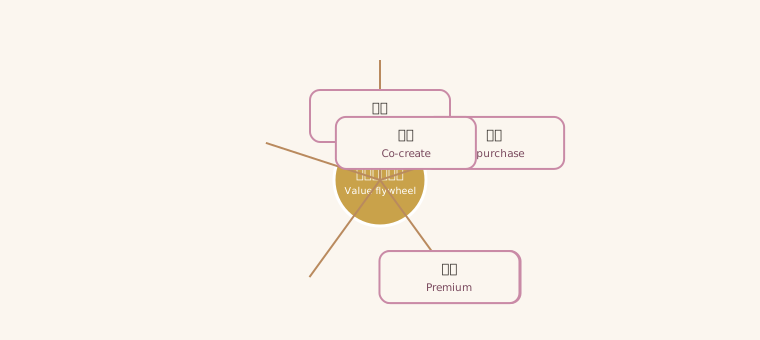
情绪价值如何变成品牌资产?机制有三:一是内隐记忆——愉悦体验经杏仁核编码,再遇同款瓶身即唤起安宁;二是催产素与社会依恋——被善待的互动提升信任,使品牌从“物件”变“关系对象”;三是行为复利——安心提升品牌共鸣与顾客终身价值。三者循环,便成飞轮。
How does emotional value become brand equity? Three mechanisms: (1) implicit memory—pleasure encoded by the amygdala re-summoned calm at the sight of the same bottle; (2) oxytocin and social attachment—being treated kindly builds trust, turning the brand from object to relation; (3) behavioural compounding—calm lifts brand resonance and customer lifetime value. The three loop into a flywheel.
可观测的证据是:同一客户复购三次后,对价格的敏感度下降,对品牌的形容从“好用”变为“离不开”。这正是飞轮转起来的标志——情绪记忆替代了理性比价。
Observable proof: after three repurchases, a customer's price sensitivity drops and the word shifts from "works" to "can't do without". That is the flywheel spinning—emotional memory replaces rational comparison.
反例同样说明问题:只卖功能、不顾情绪的品牌,促销一停销量就掉——因为没留下记忆,只剩比价。情绪记忆,才是对抗价格战的护城河。
The counter-case proves it: brands selling function only, not emotion, see sales drop once promos stop—no memory left, only price comparison. Emotional memory is the moat against price war.
对客户,情绪价值把护理升华为自我照护的片刻,对抗碎片化与孤独;对品牌,多花一份“把人当人”的诚意,换来更稳复购与更低获客成本;对社会,一个克制、诚实、反焦虑的品牌,是对“容貌焦虑工业”的温和矫正。
For the customer, it elevates care into a moment of self-nurture against fragmentation and loneliness; for the brand, a bit more 'treat people as people' buys steadier repurchase and lower acquisition cost; for society, a restrained, honest, anti-anxiety brand gently corrects the anxiety industry.
这正是宝措卤阳“净润如初”的深层注脚:净是洁净,润是滋养,如初是回到本真、不被评判的两分钟。情绪价值在此不是话术,而是产品哲学的一部分。
This is the deeper meaning of 'net & moist, as at first': clean, nourish, return to the unjudged two minutes. Here emotion is not a pitch but part of the product philosophy.
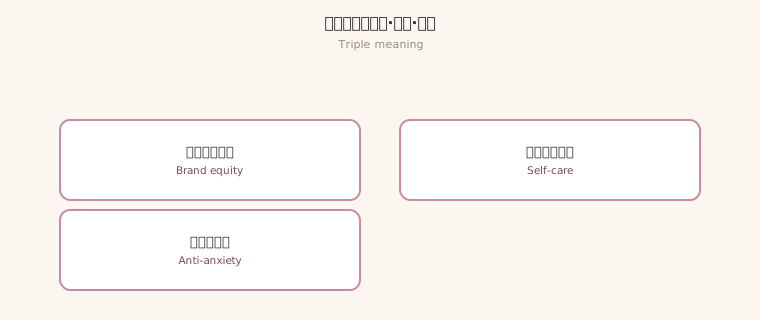
意义落在三层:对品牌,情绪价值把一次性交易升为可复利的关系资产,抵御同质化;对客户,它把护理升华为自我照护的片刻,对抗碎片化与孤独;对社会,一个克制、诚实、反焦虑的品牌,是对“容貌焦虑工业”的温和矫正。三层互相加强。
Meaning lands on three layers: for the brand, emotional value lifts one-off sales into compoundable relational equity that resists commoditization; for the customer, it raises care into a moment of self-nurture against fragmentation and loneliness; for society, a restrained, honest, anti-anxiety brand gently corrects the "appearance-anxiety industry". The three reinforce one another.
要点:反焦虑不是口号,而是“不制造缺憾感”的具体克制——不拿瑕疵吓人、不拿同龄人对比、不把护理说成救赎。克制,本身就是情绪价值。
Key: anti-anxiety is not a slogan but the concrete restraint of not manufacturing lack—no flaw-scare, no peer-comparison, no "skincare as salvation". Restraint itself is emotional value.
一句话收束:品牌因情绪而被记住,客户因情绪而被善待,社会因情绪而少一分焦虑——三者同向,方为可持续。
In one line: brands are remembered by emotion, customers treated by it, society eased of anxiety by it—aligned, that is sustainability.
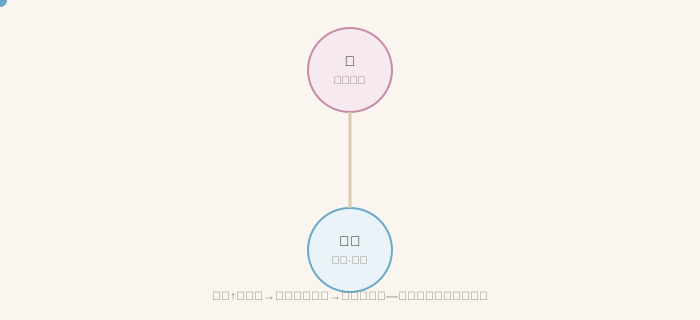
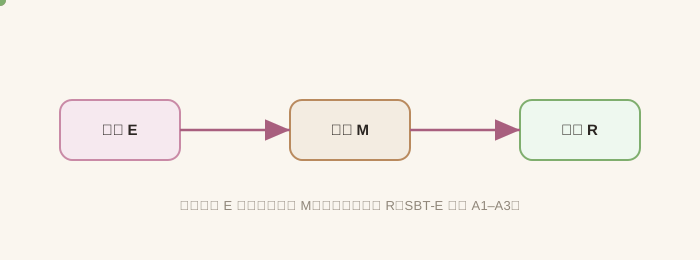
由此四问获统一回答:目的对应 A1–A3 的动机与资产目标;方法五路径是使 E→M→R 递增的可控手段;作用是 A2–A3 的神经与行为实现;意义是 R 在三重主体的外溢。逻辑闭环,自洽成立。
The four questions close into one loop: purpose = A1–A3 goals; method = the five paths making E→M→R rise; mechanism = A2–A3 in neural and behavioural form; meaning = R spilling onto three subjects. The system is consistent.
下面以六条公理收束上册:每条都可由前文推导,彼此不矛盾,合起来构成一套严格自洽的理论。读时宜从 A1 顺推至 A6,再回到“为何、何为、如何、何益”四问自验。
The volume closes with six axioms: each derivable from earlier pages, mutually consistent, together a strictly self-coherent theory. Read A1 to A6 in order, then test them against the four questions—why, what, how, benefit.
本册把理论落为可执行的五层操作,并给出一页式落地检查表。 本册把理论落为可执行的五层操作,并给出一页式落地检查表。
感官是情绪价值第一入口。香氛上,宝措卤阳取“清透湖岸气息”的低刺激取向,以嗅觉锚定宁静而非以浓香张扬;质地上,修护乳“轻盈不黏腻”、修护霜“绵密包裹”,让触感本身成安抚;色彩与包材以暖白、低饱和传递“干净、诚实”的信号。
Senses are the first door. Our scent is a low-stimulation 'lake-shore' note anchoring calm rather than a loud perfume; textures—light lotion, rich cream—make touch itself soothing; warm-white, low-saturation packaging signals 'clean and honest'.
操作清单:① 固定品牌气味指纹;② 质地梯度匹配肤质(水→乳→霜对应油/混/干);③ 包材去冰冷化;④ 感官改动先盲测情绪评分再上线。
Checklist: (1) fix the scent fingerprint; (2) match texture to skin type; (3) de-chill the packaging; (4) blind-test emotional score before launch.
要点:感官不是越贵越高级,而是越一致、可回忆、不刺耳,越能沉淀为情绪线索[6]。
Key: senses need not be expensive, only consistent, memorable and un-harsh.
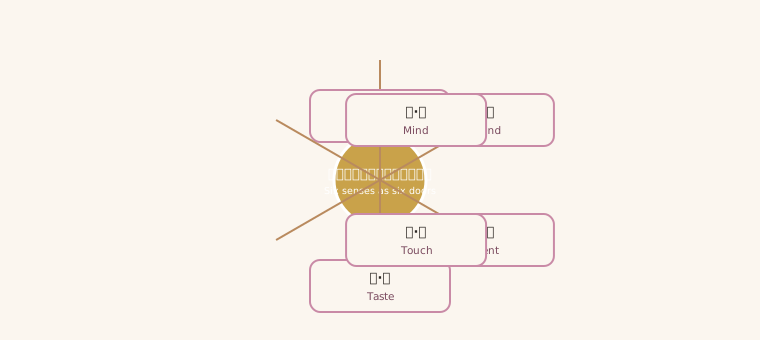
佛教《心经》以“照见五蕴皆空”破执,所列“眼耳鼻舌身意”正是人接触世界的六道门(六根)。护肤是一场高度感官化的相遇:香入鼻、质与触入身、色入眼、仪式中的静默与流水声入耳,而意收纳前五根的印象、生起意义与依恋。SBT-E 把六根当作情绪价值的六条入口,逐门经营。
以此反观“香、质、色、触”:鼻(香)锚定宁静,身(质·触)给予安抚,眼(色)传递诚实,耳(环境声)营造安定,意(整体感知)把碎片缝成“我被好好对待”的故事。六根齐修,方成安心。而《心经》“无眼耳鼻舌身意”的空性,恰提醒我们:品牌不可把六根变成诱人成瘾的钩——服务人,而非囚禁人。
The Heart Sutra, breaking attachment through "seeing the five aggregates as empty", lists eye, ear, nose, tongue, body and mind—the six sense-doors (six roots) by which we meet the world. Skincare is a deeply sensory encounter: scent enters the nose, texture and touch the body, colour the eye, silence and running water the ear, while mind gathers the impressions of the five and births meaning and attachment. SBT-E treats the six roots as six entrances to emotional value, tended one by one.
Mapped onto scent, texture, colour, touch: nose (scent) anchors calm, body (texture, touch) soothes, eye (colour) signals honesty, ear (ambience) settles, mind (overall sense) stitches fragments into the story "I am well treated". All six tended make calm. And the sutra's "no eye, ear, nose, tongue, body, mind" warns: never turn the six roots into hooks of addiction—serve the person, do not imprison them.
落到产品:宝措卤阳取“清透湖岸气息”的低刺激香,正是只轻开“鼻”这一扇、而不刺其他五根的做法;包材去冰冷、用暖白,是让“眼”与“意”同时安心。六根齐修,先从不扰开始。
In product terms: Baocuo Luyang's low-stimulation "lake-shore" scent gently opens only the "nose" door without irritating the others; warm-white, de-chilled packaging settles both "eye" and "mind". Tending six roots begins with not disturbing them.
叙事核心是真实。宝措卤阳起点是一片湖——卤阳湖,以及创始人把家乡带出去的朴素动机。叙事拆三层:品牌起源(湖与初心)、用户故事(你与肌肤的日常)、地域/民族叙事(藏语“措”即湖,连高原与平原)。三层都不编“珍稀秘方”,只讲为什么、怎么做、踩过的坑。
Narrative must be true. BAOCUO LUYANG starts with a lake—Luyang Lake—and the founder's simple wish to carry home outward. Three layers: brand origin, user stories, and a regional/national layer (Tibetan 'tsho' = lake). None invents 'rare secret formulas'; all tell why, how, and the pitfalls.
操作清单:① 故事须有可核查事实锚点;② 用户故事经授权真实呈现;③ 语气克制不裹挟;④ 以“品牌手记”定期公开过程,建透明信任。
Checklist: (1) verifiable anchors; (2) authorised real user stories; (3) restrained tone; (4) publish process notes for transparent trust.
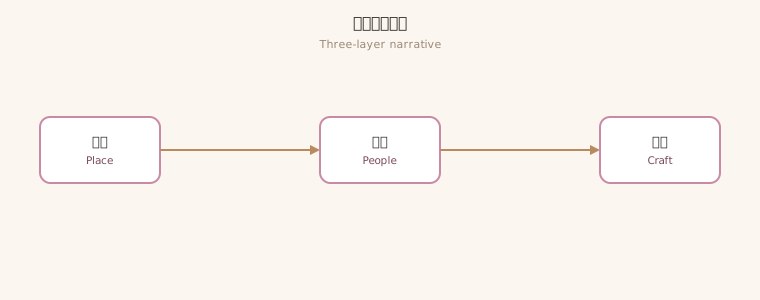
叙事的核心是真实。宝措卤阳起点是一片湖——卤阳湖,以及创始人把家乡带出去的朴素动机。叙事拆三层:地缘(高原湖岸的清透)、人伦(藏语“措”即湖,连高原与平原的亲情)、匠心(为什么这么做、踩过的坑)。三层都不编“珍稀秘方”,只讲为什么、怎么做、难在哪。
Narrative hinges on truth. Baocuo Luyang begins with a lake—Luyang Lake—and a founder's plain wish to carry home outward. It splits into three layers: place (the clarity of a highland shore), people (in Tibetan "tso" means lake, linking plateau and plain as kin), craft (why, how, and where it stumbled). None invents a "rare secret formula"; each tells why, how, and what was hard.
要点:叙事三不——不编“珍稀秘方”、不吓唬、不贩卖焦虑。真实本身,就是最省成本的记忆钩子。
Key: narrative's three nos—no fake "rare formula", no scare, no anxiety-selling. Truth itself is the cheapest memory hook.
落地三问:这句故事客户能复述吗?经得起追问吗?讲完他更安还是更慌?三问皆“能/是”,方为好叙事。
Three checks: can the customer retell it? Does it survive questions? After hearing it, calmer or more anxious? All yes—then it is good narrative.
仪式确认把“涂一层东西”升级为“我和自己相处的两分钟”。我们给水、乳、霜明确步骤与节奏:洁面后“补水打底”、日间“轻盈锁水”、夜间“密集修护”。步骤越清晰,越易成习惯;习惯越稳,情绪托底越强。
Ritual turns 'applying something' into 'two minutes with myself'. We name the steps: tone, light-lock by day, deep-repair by night. Clearer steps → easier habits → steadier emotional baseline.
操作清单:① 固化三步法;② 以节气/周期提示温和护理;③ 用简短引导降低“我是否做对”的焦虑;④ 避免“再不用就晚了”的紧迫叙事。
Checklist: (1) fix the three steps; (2) gentle reminders by season; (3) lower 'am I doing it right' anxiety; (4) no urgency narratives.
小字:仪式的价值不在神秘,而在重复带来的可控感。可控感是情绪价值最便宜也最稳的来源[7]。
Note: ritual’s value is not mystery but the controllability repetition brings.
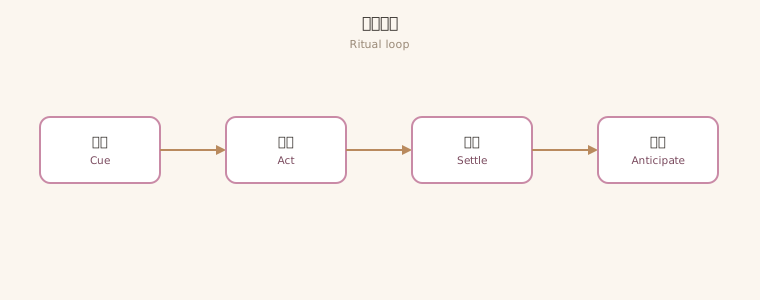
仪式把“使用”变成“安定动作”。宝措卤阳建议:早晚两次,先深呼吸三次再涂抹,让护肤成为一天开合之间的逗号。动作越固定,越不耗意志;越不耗意志,越能坚持;越坚持,安心越厚。仪式闭环因此形成:触发→动作→安定→回盼。
Ritual turns "use" into a "settling act". Baocuo Luyang suggests: twice daily, three slow breaths before applying, letting care be the comma between a day's opening and closing. The more fixed the act, the less willpower it costs; the less it costs, the more it sticks; the more it sticks, the thicker the calm. Thus the ritual loop: cue, act, settle, anticipate.
举例:深夜护肤常是“情绪着陆点”——关掉工作群、放下角色,只做涂抹这一件小事,身体便收到“今天到此为止”的信号。仪式的价值,不在产品,在停顿。
Example: night care is often an "emotional landing point"—close work chats, drop the role, do only the small act of applying; the body receives "today is over". The ritual's value is the pause, not the product.
警惕仪式变负担:若某天太累不想抹,也允许“今天免一次”。仪式服务人,不奴役人;弹性本身,也是安心的一部分。
Guard against ritual as burden: if too tired to apply, skip once—allowed. Ritual serves, never enslaves; flexibility too is part of calm.
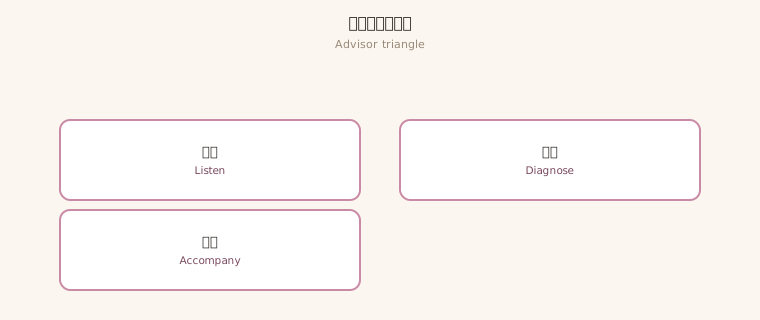
服务层把情绪价值从“物”延伸到“人”。顾问式服务以肤质自测与选购逻辑替代硬推销;情绪陪伴以“不被评判”的语气,接纳客户当下的肌肤与情绪状态。我们明确“四不做”:不制造容貌焦虑、不承诺疗效、不收面子溢价、不编造成分故事——这四条本身即最强情绪托底。
Service extends value from thing to person. Advisory service replaces hard-sell with skin-type self-tests; emotional companionship accepts the customer's state without judgement. Our 'four don'ts'—no anxiety, no efficacy claims, no face-premium, no fake stories—are themselves the strongest baseline.
操作清单:① 话术去焦虑化培训;② 售后以“陪伴”而非“促单”为 KPI;③ 私域提供可执行知识;④ 对低潮客户给更慢回应节奏。
Checklist: (1) de-anxiety training; (2) companionship not upsell as KPI; (3) useful private-domain content; (4) slower pace for low-mood customers.
服务层是“人”的连接。顾问式服务不推销,只倾听与陪伴:先问肤质与生活习惯,再给可执行的少量建议,长期跟进口碑与不适。情绪陪伴体现在“被认真对待”——客户说的每一句抱怨都被接住,而非被话术挡回。
Service is the human link. Advisory care does not sell; it listens and stays: ask skin type and habits first, then give a few actionable tips, and follow up on comfort over time. Emotional companionship shows as "being taken seriously"—every complaint is caught, never deflected by a script.
要点:顾问式服务的边界——只陪护理,不诊断疾病;只给可执行的小建议,不替客户焦虑。越克制,信任越厚。
Key: advisory care has a boundary—accompany care, never diagnose; give small actionable tips, never borrow the customer's anxiety. More restraint, thicker trust.
一句话:最好的服务,是让客户觉得“有人懂我”,而不是“有人卖我”。懂,是最好的情绪价值。
In one line: the best service makes the customer feel "someone gets me", not "someone sells me". Being understood is the finest emotional value.
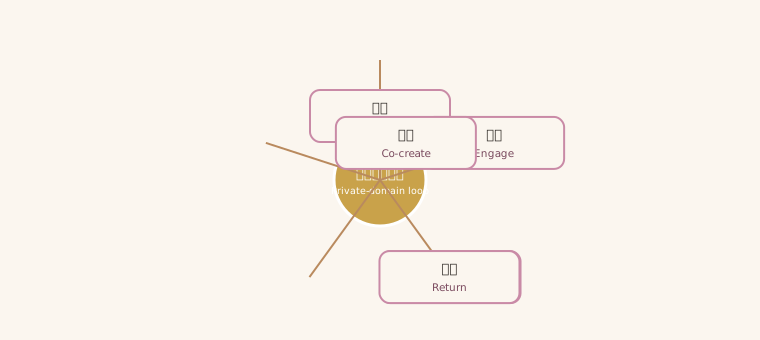
数字化不是把客户变数据,而是用数据更温柔地服务。私域用于长期陪伴而非高频打扰;内容用于授人以渔而非制造匮乏;情绪数据(满意度、回复语气、复购节奏)用于发现“谁需要被慢待”,而非精准施压。
Digital is not turning customers into data but serving them more gently. Private domains companion, not spam; content teaches, not deprives; emotional data spots 'who needs slowing', not who to pressure.
操作清单:① 推送以价值密度约束频次;② 建“情绪温度计”预警负面情绪;③ 反馈闭环进迭代;④ 数据采集明示且最小必要。
Checklist: (1) value over frequency; (2) an 'emotion thermometer' warning; (3) feedback loop to iteration; (4) minimal, disclosed data.
红线:任何以“情绪弱点”为靶点的精准收割,都违反 A4 安全底线,长期必遭关系背叛减项反噬[8]。
Red line: targeting emotional weakness violates A4 and backfires via A3’s betrayal term.
数字化让情绪价值可观察、可迭代。私域不是收割场,而是“情绪档案”:记录客户的使用节奏、偏好与情绪节点,用内容(科普、故事、安静的提醒)而非促销刷屏来维系。数据只用于“更懂你、更省你心”,绝不用于制造焦虑式逼单。
Digital makes emotional value observable and iterable. The private domain is not a harvesting field but an "emotional file": it records rhythm of use, preference and mood, and sustains via content (science, stories, quiet reminders) rather than promo spam. Data serves "know you better, spare you worry"—never anxiety-driven pressure to buy.
举例:私域里一条“换季了,你的屏障还好吗”的安静提醒,往往比十张促销图更攒情绪。数据用在“更懂你、更省你心”,而非“更准地催你买”。
Example: a quiet private-domain nudge "season changed, is your barrier OK?" often builds more feeling than ten promo images. Data serves "know you, spare you worry", not "push you to buy more precisely".
红线:情绪数据只读不逼;任何“再不买就错过”的话术,都违背以人为本。数据是用来更懂你,不是更准地催你。
Red line: read mood data, never pressure it; any "buy or miss out" line betrays people-first. Data is to know you better, not push you harder.
补充:私域的温度,来自“慢回复”而非“秒回机器人”;让人感觉背后有真人,情绪才落得稳。
Add: the warmth of a private domain comes from slow replies, not instant bots; feeling a real person behind it steadies the emotion.
把上述措施收敛为一页可勾选的检查表,供一线与管理者使用。
The measures condense into one checkable page for front-line and managers.
逐条通过即为合格的情绪价值构建;任一条长期不达标,则按 A3 背叛减项计入关系损耗,需主动补救。
All checked = a qualified build; any chronic failure accrues relational loss under A3's betrayal term and needs proactive repair.
落地不在口号,在一页可勾选的检查表。下表把五层操作拆成可执行的“是/否”项,上线前逐条过一遍,缺一项就补一项。
Execution lives not in slogans but in a one-page checklist. The table breaks five layers into tickable yes/no items—run through before launch, fill any gap.
本册从西医、中医、藏医、瑶医四套话语,论证情绪价值对身心健康的巨大附加价值。 本册从西医、中医、藏医、瑶医四套话语,论证情绪价值对身心健康的巨大附加价值。
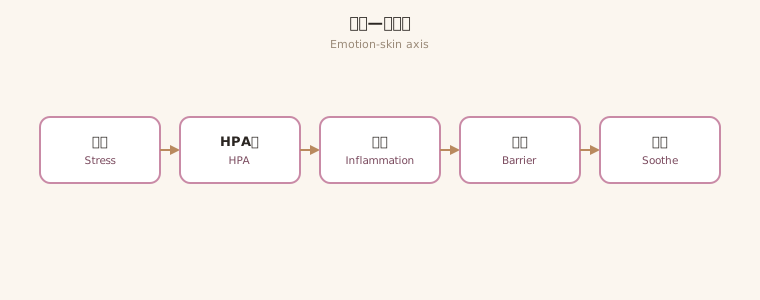
现代医学把“情绪影响皮肤”从经验升为机制。皮肤与中枢存在双向通信:压力经 HPA 轴升皮质醇,削弱屏障、延缓愈合、放大炎症;舒缓情绪经副交感与内啡肽促进微循环与修复。心理皮肤学研究这一轴。
Modern medicine makes 'emotion affects skin' a mechanism. Skin and brain talk both ways: stress raises cortisol via HPA axis, weakening barrier and amplifying inflammation; calm promotes repair via parasympathetic and endorphins. Psychodermatology studies this axis.
对客户的附加价值:一套让人安心的护肤仪式,可能不只是心理安慰,而经情绪—皮肤轴对屏障产生真实生理增益。这为中册“仪式确认”提供医学注脚。
Added value: a calming ritual may be more than comfort—via the axis it can give real physiological benefit to the barrier, endorsing the 'ritual' measure.
小字:化妆品不是药,不能宣称治疗;此处仅说明情绪对皮肤的“附加”背景,不替代诊疗[9]。
Note: cosmetics are not drugs; this only frames emotion’s additive context, not treatment.
西医与神经科学称“情绪—皮肤轴”:压力激活 HPA 轴与交感神经系统,促炎因子升高、皮脂与屏障失调,表现为爆痘、泛红、瘙痒;而安抚(触觉、气味、被善待的互动)经副交感与催产素通路反向缓解。护肤因此既是皮肤护理,也是神经系统的小幅“降温”。
Western medicine and neuroscience name the "emotion-skin axis": stress activates the HPA axis and sympathetic nervous system, raising pro-inflammatory factors and disturbing sebum and barrier—breakouts, redness, itch. Soothing (touch, scent, kindly interaction) reverses this via parasympathetic and oxytocin pathways. Skincare is thus both dermal care and a small neural "cool-down".
可观测信号:压力期易爆痘、泛红;坚持安心护肤后入睡更快、皮炎复发减少。正反双向,都印证“情绪—皮肤轴”真实存在。
Observable signal: stress brings breakouts and redness; steady calming care improves sleep and cuts flare-ups. Both directions confirm the emotion-skin axis is real.
一句话:皮肤是情绪的显示器;安抚情绪,常比叠加功效成分更早看到变化。先安人,再安皮。
In one line: skin is the display of emotion; soothing mood often shows change before adding actives. Calm the person, then the skin.
补充:正因情绪—皮肤轴存在,护肤才不该只盯成分表;给客户一点“被接住”的感觉,屏障往往好得更快。
Add: precisely because the emotion-skin axis exists, care should not stare only at the INCI list; a felt "caught" moment often speeds barrier recovery.
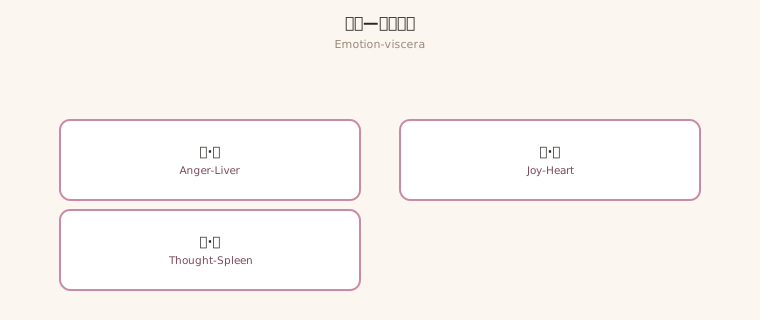
中医以“七情内伤”立论:怒伤肝、喜伤心、思伤脾、悲伤肺、恐伤肾,情志“无不从心而发”;又言“气血冲和,万病不生;一有拂郁,诸病生焉”。护肤若能助人“恬淡虚无”“情志舒畅”,恰与“治未病”同构。
TCM holds that the seven emotions injure the five zang: anger hurts liver, joy heart, worry spleen, grief lung, fear kidney; all emotions 'arise from the heart'. And: 'when qi and blood are harmonious, no disease; once repressed, all ills arise'. Skincare that helps one stay calm aligns with 'treating before illness'.
宝措卤阳“如初”与中医“回归本真、气血和畅”呼应。每日两分钟安心护理,可视为现代人低成本的情绪调摄,对肝郁、思虑有温和缓冲。
'As at first' echoes TCM's return to authenticity and harmonious flow. Two calm minutes daily is low-cost emotional regulation, a gentle buffer against stagnation and worry.
要点:不做中医疗效承诺,只把“情志—身心一体”作为理解附加意义的本土话语[10]。
We make no TCM efficacy claim; we only use its mind-body unity as a local lens.
中医讲“情志伤五脏”:怒伤肝、喜伤心、思伤脾、悲伤肺、恐伤肾;又云“情志之伤,无不从心而发”。护肤所予的安宁,正对应“恬淡虚无,真气从之”的养神之道。当客户因护肤得片刻舒展,是“形神共养”的微小实践。
Chinese medicine holds that emotions damage the five viscera: anger harms liver, joy heart, thought spleen, grief lung, fear kidney; and "all emotional injury begins in the heart". The calm skincare gives matches the art of nurturing spirit through tranquillity. A moment of ease via care is a small practice of "body and spirit nourished together".
举例:长期焦虑的客户,借每日护肤那片刻“恬淡”,恰是中医“移情易性”的微观实践——不治病,却给情绪一个出口,使“怒不伤肝”有了日常抓手。
Example: a chronically anxious client's daily "tranquil" skincare moment is a micro-practice of TCM "shifting emotion, changing nature"—not treating disease, but giving feeling an outlet, making "anger spares the liver" a daily handle.
一句话:护肤的“静”,是给七情一个出口;出口在,五脏便少受连累。静,是养神的日常功。
In one line: skincare's "stillness" gives the seven emotions an outlet; with it, the five viscera suffer less. Stillness is daily spirit-nurture.
补充:情志养生不靠贵药,靠日常那点“不较劲”;护肤的慢,正是不较劲的练习场。
Add: emotion-care needs no costly drug, only daily "not forcing it"; skincare's slowness is exactly the practice ground of non-forcing.
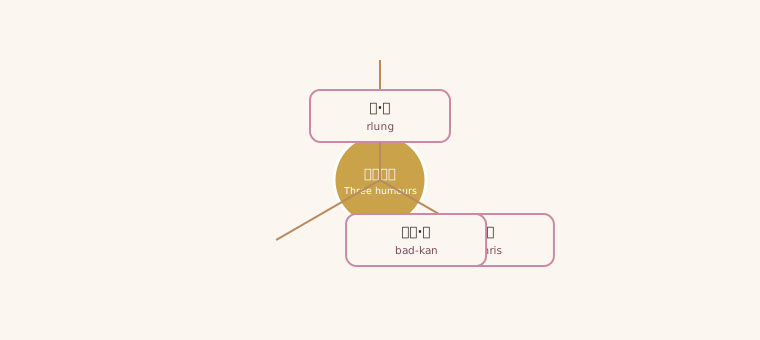
藏医以隆(风/气)、赤(胆/火)、培根(痰/水土)三因解释身心。情绪失衡多归“隆”紊乱——焦虑、失眠、浮动皆与隆相关;安定、节律、温暖可平隆。品牌名“宝措”取自藏语“湖(措)”,自带高原静水意象,与藏医“以静制浮”暗合。
Tibetan medicine explains body-mind via three humors: rlung (wind), mkhris (bile), badkan (phlegm). Emotional imbalance often is disturbed rlung—anxiety, insomnia, restlessness; calm, rhythm and warmth settle it. 'Baocuo' uses Tibetan 'tsho' (lake), a still-water image that quietly matches 'stillness settles float'.
从藏医看,一套低刺激、稳定、可重复的护肤仪式,有助于把外浮的“隆”安住于日常的“水”中——这正是情绪价值在民族医学话语里的附加意义。
Seen this way, a low-stimulation, steady, repeatable ritual helps settle floating rlung into everyday water—the added meaning in ethnic-medical terms.
藏医以“隆、赤巴、培根”三因解释身心:隆(风)主运行与情志,赤巴(火)主温热与代谢,培根(水)主滋养与稳定。情绪失衡多归“隆”乱;每日安定的护肤仪式,恰是调“隆”归位的小法。三因和,则身轻心静。
Tibetan medicine explains body and mind by three humours: rlung (wind) governs movement and emotion, mkhris-pa (fire) warmth and metabolism, bad-kan (water) nourishment and stability. Emotional imbalance often traces to disturbed rlung; a daily calming skincare ritual is a small way to settle rlung. When the three humour are balanced, body is light and mind still.
要点:现代“隆”乱,多因信息过载与节奏失速;护肤的慢动作(深呼吸、慢涂抹)正是对治——以静制动,使风归位。
Key: modern rlung disorder often comes from information overload and lost pace; skincare's slow acts (slow breath, slow touch) counter it—stillness settles the wind.
一句话:隆归位,人便定;每日那点慢,正是现代人最缺的“风调”。慢,不是懒,是调。
In one line: rlung settled, the person is steady; that daily slowness is the "wind in harmony" modern people lack most. Slow is tuning, not laziness.
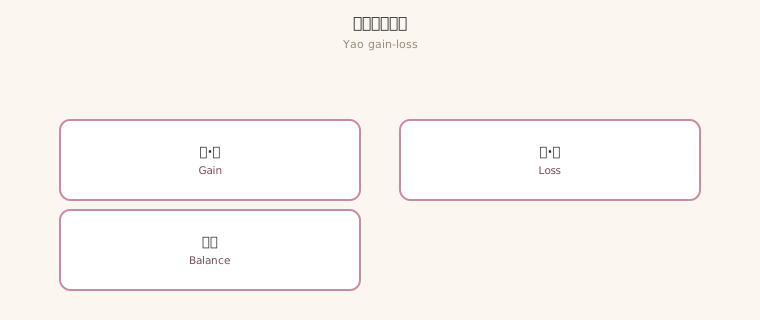
瑶医以“盈亏平衡”为核心,认为健康是体内盈亏的协调,且身心一元、不可分割。情绪过度耗散为“亏”,过度郁滞为“盈”,皆致病。护肤作为自我照护的微小确证,可补日常之“亏”、疏生活之“盈”。
Yao medicine centres on gain–loss balance: health is coordinated gain and loss, with mind and body one. Over-dispersion is 'loss', over-stasis is 'gain', both sickening. Skincare as a small self-care proof can refill daily 'loss' and unblock 'gain'.
四套医学——中医情志五脏、藏医三因、瑶医盈亏、西医情绪—皮肤轴——话语迥异,却共指一点:情绪状态是身心健康的可变量,而温和的日常仪式是可及的调节入口。
Four medicines differ in words but converge: emotion is a variable of health, and a gentle daily ritual is an accessible regulator.
瑶医重“盈亏平衡、身心一元”:过耗为亏,过滞为盈;情绪亦如账目,只透支(亏)会垮,只囤积(盈)会霉。护肤是每天一笔小对账——既补给(盈养),也疏泄(亏耗),使身心这本账平平常常、不偏不倚。
Yao medicine stresses "balance of gain and loss, mind-body as one": over-drain is loss, over-stasis is gain; emotion too is an account—only spending (loss) bankrupts, only hoarding (gain) moulds. Care is a small daily reconciliation: nourish (gain) and release (loss) so the account stays even.
举例:冬季“盈养”(加湿、保暖、厚润),夏季“亏耗”(清透、排汗、轻薄),便是护肤上的每日盈亏对账。顺时调养,身心这本账才不偏。
Example: winter "gain" (humidify, warm, rich) and summer "loss" (light, vent, thin) are the daily gain-loss reconciliation in care. Adjusting by season keeps the account even.
一句话:盈亏平衡不在药,在每日那点“该养时养、该泄时泄”的分寸。分寸,就是对。
In one line: gain-loss balance is not in medicine but in the daily measure of "nourish when due, release when due". Measure is rightness.
把四套医学并置,结论一致:情绪价值对客户身心健康的巨大附加价值,不在于“治愈”,而在于日常性的舒缓、秩序与自我善待——一种低门槛的“养心”。它不与任何医学冲突,反为其创造更好身心基底。
Put together, the four agree: the great added value lies not in 'curing' but in daily soothing, order and self-kindness—a low-threshold 'nourishing the heart'. It conflicts with no medicine; it prepares a better base.
下册立场:合规前提下,品牌应诚实呈现这种附加意义,既不夸大疗效,也不抹杀情绪对健康的真实贡献。
Our stance: compliantly, brands should honestly present this added meaning—neither overclaiming efficacy nor denying emotion's real contribution.
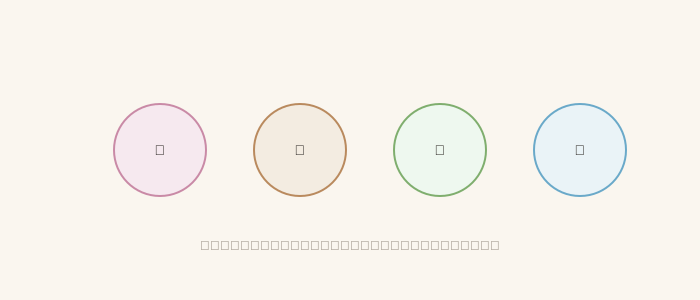
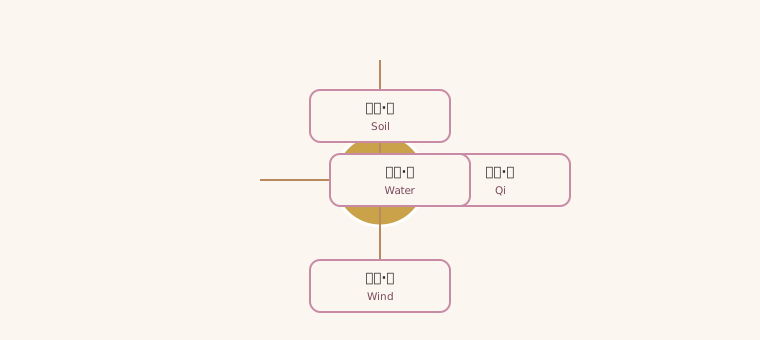
四套医学殊途同归:西医看“土”(生理基础),中医看“气”(形神流转),藏医看“风”(运行情志),瑶医看“水”(盈亏滋养)。它们共同把护肤指认为一种“养心”——不只护皮,更护被生活磨损的那点安静。情绪价值的医学附加价值,正在于此。
The four medicines converge: western sees "soil" (physiological base), Chinese "qi" (flow of body and spirit), Tibetan "wind" (movement of emotion), Yao "water" (gain-loss nourishment). Together they frame skincare as "nourishing the heart"—not only skin, but the quiet worn by life. That is the medical added value of emotional value.
要点:四医学共同的“度”——不过补、不过泻,恰是情绪价值的度。多一分执着便成成瘾,少一分用心便成敷衍。
Key: the four medicines share a "measure"—neither over-tonify nor over-drain, exactly the measure of emotional value. A bit more clinging becomes addiction; a bit less care becomes neglect.
一句话:四医学殊途同归——都把“人”放在“皮”之前;情绪价值,正是这“人”字落地的那一笔。
In one line: four medicines converge—they put "person" before "skin"; emotional value is exactly the stroke that lands the "person".
情绪价值越有效,越要守边界。风险有三:以焦虑为饵的“反向情绪价值”;把民族医学话语神化为疗效承诺;用情绪数据精准施压。三者皆触 A4 红线,长期必遭关系背叛。
The more effective, the tighter the boundary. Three risks: anxiety-bait 'reverse value'; mythologising ethnic medicine as cure; pressure via mood data. All hit A4's red line and invite betrayal.
对策:健康表述加“非医疗、不替代诊疗”;民族医学仅作文化语境;情绪数据最小必要、明示授权。如此附加价值才可持续。
Remedy: add 'non-medical' to health claims; ethnic medicine as cultural context only; minimal, authorised mood data. Then the value sustains.
医学视角落到实践,须守边界:情绪价值是“养心”的附加保健,不是诊疗;触及皮损、抑郁等,须转介专业。下列清单用以自约束。
In practice, keep boundaries: emotional value is added "heart-nurture", not treatment; refer to professionals for lesions or depression. The checklist below self-binds.
本册按时间脉络分析顶级品牌如何构建情绪价值,并提炼对宝措卤阳的镜鉴。 本册按时间脉络分析顶级品牌如何构建情绪价值,并提炼对宝措卤阳的镜鉴。
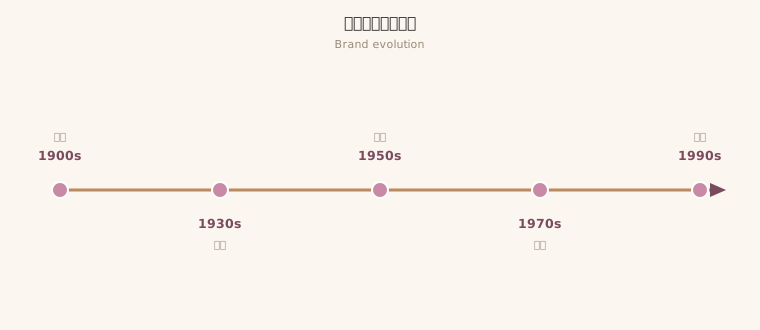
自有化妆品起,顶级品牌就在不经意间实践着情绪价值构建。早期以“洁净即美德”建立安全感;中期以“科学+奢华”建立信任与身份;当代以“叙事+社群+可持续”建立意义与归属。以下按时间脉络择要分析。
Since cosmetics began, top brands have practised emotional value almost by instinct. Early: 'cleanliness is virtue' built safety. Middle: 'science + luxury' built trust and status. Today: 'narrative + community + sustainability' builds meaning and belonging.
本册不崇拜奢华,只提炼可迁移的“神”:一致的感官、真实的锚点、可重复的仪式、被重视的服务、与价值观同频的意义。
We do not worship luxury, only extract the transferable spirit: consistent senses, true anchors, repeatable ritual, valued service, value-aligned meaning.
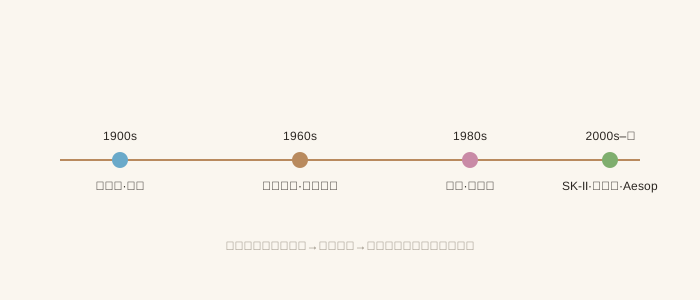
化妆品问世两百年,情绪价值的载体一直在变:从“洁净”到“优雅”,从“身份”到“科学奢华”,再到“叙事与社群”。变的只是外壳,不变的是人始终想借一瓶膏,确认自己值得被好好对待。读品牌史,是读一部“人如何被安抚”的微观史。
Two centuries of cosmetics: the carrier of emotional value keeps shifting—from "clean" to "elegant", "status" to "science-luxury", then "narrative and community". Only the shell changes; unchanged is the human wish, through a jar of cream, to confirm being worth kind treatment. Reading brand history is reading a micro-history of "how humans are soothed".
要点:情绪价值载体的迭代,本质是人“如何被看见”的迭代。瓶身会变,被认真对待的渴望不变。
Key: the iteration of emotional-value carriers is ultimately the iteration of "how humans are seen". Bottles change; the wish to be taken seriously does not.
一句话:读品牌史,读的其实是“人何时觉得自己被好好对待”的不变渴望。瓶会变,渴望不变。
In one line: reading brand history is reading the unchanging wish "to feel well treated". Bottles change; the wish does not.
补充:两百年里瓶子换了又换,唯一没换的,是普通人想借一瓶膏确认“我也值得”的朴素心愿。
Add: bottles changed across two centuries; unchanged is the plain wish of ordinary people, through one jar, to confirm "I too am worth it".
资生堂以“东西方融合”的审美叙事,把护肤变成现代优雅的身份表达;旁氏、蜜丝佛陀以大众可及的“变美”承诺,把情绪价值带给更广人群。这一时代手法朴素却有效:把产品接入“我想成为更体面的人”的自我叙事。
Shiseido's East-meets-West aesthetic made skincare an expression of modern elegance; Pond's and Max Factor brought 'beauty' to the many. The simple, effective move: plug the product into 'I want to be more presentable'.
经验要点:身份投射无需高价,只需与客户想成为的自己对齐。
Lesson: identity projection needs no high price, only alignment with who the customer wants to be.
启蒙时代(1900s–1950s)的品牌,先把“洁净”与“优雅”卖给刚进入公共生活的女性,再把“身份”缝进包装。这一时期的情绪价值朴素却有力:一瓶香皂或面霜,是普通人对“体面”的第一张入场券。早期的品牌像第一面镜子——不修饰你,只让你看清想成为的样子。
In the enlightenment era (1900s-1950s), brands first sold "clean" and "elegant" to women entering public life, then stitched "status" into packaging. The emotional value was plain yet potent: a bar of soap or cream was the first ticket to "decency" for ordinary people. Early brands were a first mirror—not retouching you, only showing who you would be.
举例:当年一瓶冷霜对刚进工厂的女工,意味着“我也体面”;今日一瓶修护乳对加班青年,意味着“我也值得”。载体不同,内核同一。
Example: a cold cream once meant "I too am decent" to a factory worker; a repair lotion today means "I too am worth it" to an overtime youth. Different shell, same core.
雅诗兰黛以“每位女性都该被宠爱”的顾问式服务,把销售变成被重视的体验;其子类海蓝之谜以“奇迹 broth”传奇与丰润质地,构建近乎疗愈的仪式感与身份溢价。兰蔻、香奈儿以法式优雅与艺术联名,把护肤接入文化与审美身份。
Estée Lauder's 'every woman deserves to be pampered' made selling feel valued; La Mer's 'miracle broth' legend and rich texture built healing ritual and status premium. Lancôme and Chanel plugged skincare into cultural-aesthetic identity via French elegance and art.
经验要点:传奇叙事须有可感知的质地与仪式承接,否则沦为空话;宠爱感来自“被认真对待”,而非价格本身。
Lesson: legend needs perceptible texture and ritual or it's empty; being 'pampered' comes from being taken seriously, not from price.
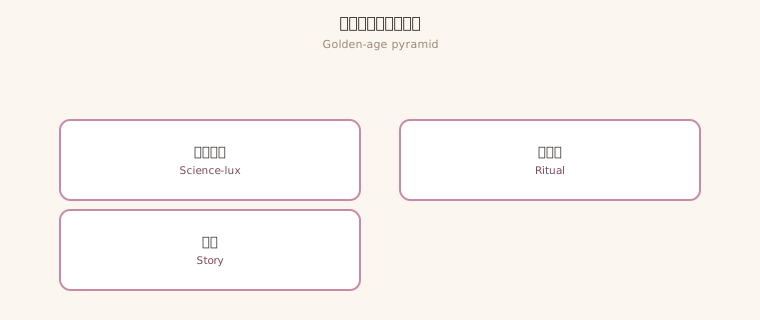
黄金时代(1960s–1990s)把情绪价值做到极处:科学背书撑起“奢华可信”,仪式感把使用变成身份展演。海蓝之谜以“修复奇迹”的故事,把一罐膏体升格为“被认真对待”的象征。这一时代的启示是:故事必须落脚于真实功效,否则仪式会塌成空洞。
The golden era (1960s-1990s) perfected emotional value: science lent "luxurious credibility", ritual turned use into identity display. La Mer's "miracle repair" story raised a jar to a symbol of "being taken seriously". The lesson: a story must rest on real efficacy, or the ritual collapses into hollowness.
黄金时代的警示:故事必须落在真实功效,否则仪式会塌成空洞。宝措卤阳当以“可查成分、可感安心”为锚,不学华丽空心。
Lesson from the golden era: a story must rest on real efficacy, or the ritual collapses hollow. Baocuo Luyang should anchor on "checkable formula, felt calm", not hollow glamour.
一句话:黄金时代教会我们——奢华可以学,空心不能学。宁可朴素真,不可华丽空。
In one line: the golden era teaches—luxury can be learned, hollowness must not. Plain-true beats gorgeous-empty.
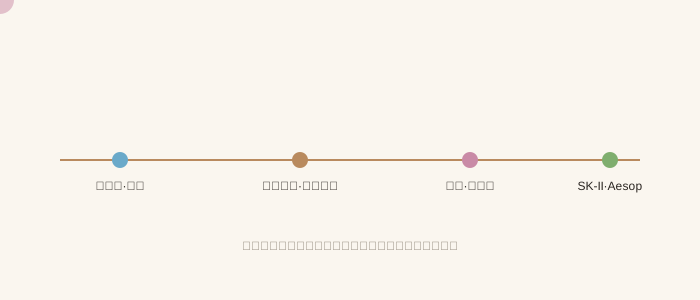
SK-II 以“改写肌肤命运”的叙事与雕塑般质地建立强身份投射;欧舒丹以普罗旺斯地域叙事与感官一致构建治愈式宁静;Aesop 以极简书卷气与门店嗅觉设计,把购物变成一段沉思。它们证明:当代情绪价值主战场,已从“我更美”转向“我更安心、更自洽、更与世界和解”。
SK-II's 'rewrite your skin's fate' and sculpted texture build strong projection; L'Occitane's Provence narrative and sensory consistency build healing calm; Aesop's minimalism and in-store scent turn shopping into reflection. Proof: the battleground shifted from 'prettier' to 'calmer, more at peace, more reconciled with the world'.
经验要点:社群与可持续不是装饰,而是意义(M)的新来源;谁先真诚承接客户价值观,谁先沉淀关系(R)。
Lesson: community and sustainability are new sources of meaning (M); whoever first sincerely holds the customer's values first compounds relation (R).
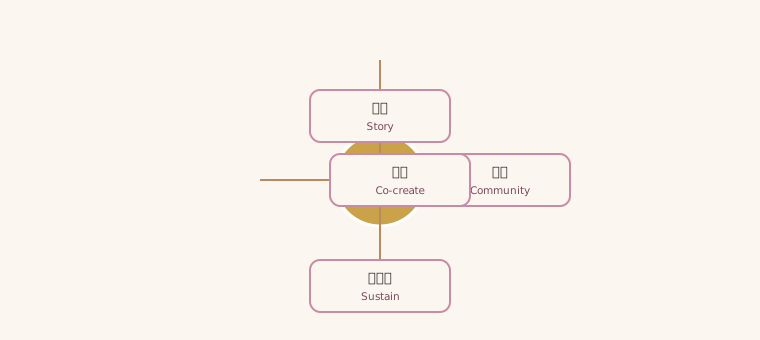
当代(2000s–今)的情绪价值转向叙事、社群与可持续意义。Aesop 用书店般的空间与气味叙事,让购物变成一种“慢下来”的修养;诸多新锐以透明成分与环保立场,把消费变成价值投票。这一时代提醒宝措卤阳:意义要真,社群要轻,别把意义做成新的焦虑税。
Today (2000s-now) emotional value turns to narrative, community and sustainable meaning. Aesop uses bookshop-like spaces and scent stories to make shopping a slow修养; newcomers use transparent formulas and eco stances to turn buying into value-voting. The era warns Baocuo Luyang: keep meaning true, community light, and never tax anxiety anew in the name of meaning.
当代陷阱:把“意义”做成新的焦虑税。宝措卤阳须守住轻与真——社群是为陪伴,不是为转化;可持续是本色,不是人设。
Today's trap: turning "meaning" into a new anxiety tax. Baocuo Luyang must keep light and true—community for company, not conversion; sustainability as nature, not persona.
一句话:当代情绪价值的最高形,是“轻”——轻承诺、轻焦虑、轻拥有,重陪伴。轻,才留得住。
In one line: today's finest emotional value is "light"—light promise, light anxiety, light possession, heavy companionship. Lightness stays.
顶级经验,宝措卤阳可取其“神”不必取其“价”。可借鉴:一致感官指纹、真实传奇锚点、可重复仪式、被重视服务、与价值观同频的意义。不可照搬:高额面子溢价与稀缺焦虑叙事——这与“平价中高端、不收面子溢价、不制造容貌焦虑”相反。
We can take the spirit, not the price. Borrow: consistent senses, true anchors, repeatable ritual, valued service, value-aligned meaning. Not: face-premium and scarcity-anxiety narratives—opposite to 'affordable-premium, no face-premium, no anxiety'.
结论:以卤阳湖静水意象为情绪母题,以真实与克制为方法,宝措卤阳可在不模仿奢华下,构建属于自己的、现代中国的客户情绪价值系统。
Conclusion: with Luyang Lake's still-water motif and truth-plus-restraint as method, BAOCUO LUYANG can build its own modern-Chinese emotional system without copying luxury.
附册要义:研究对手,是为了更清楚地做自己。情绪价值终局,不是让客户更依赖品牌,而是让客户更安顿于自己[11]。
Point: study rivals to know yourself better. The end of emotional value is not dependence on the brand but peace with oneself.
镜鉴不是为了复制,而是为了对照:顶级品牌做对了什么,我们又该守住哪条“不复制”的底线。下面给出对宝措卤阳的四条可迁移启示。
The mirror is for contrast, not copy: what top brands got right, and which "do-not-copy" lines we keep. Four transferable lessons for Baocuo Luyang follow.